

Website Builder or Custom Website: Which Is Right for You?
This article looks at website builders for online stores, shares our experience and helps you choose between a builder and a custom-developed site. We compare their strengths and limitations, including SEO.
A website builder is a platform that lets people assemble a site from ready-made blocks and launch it quickly without coding. You still need to understand design and marketing planning so the finished site can support business goals.
A custom CMS website is built with developers. That does not mean you need a programmer every time you want to update it. Each project can include an admin panel that lets your team manage pages without coding. A custom site can also provide the specific features your business needs, without unnecessary extras.
Round 1: Design
What design options do website builders offer?
Builders usually offer ready-made templates that speed up production. But tools such as Tilda's Zero Block can also be used to create a distinctive design and animation from scratch, making the result look custom-built.
For The Voice Group, we created a brand website, landing page and three campaign pages with 3D models and animated elements in two weeks. We used very few templates and built most of the experience in Tilda's Zero Block, with the designer creating the pages individually.
Explore the full case study for a premium audio brand website built on Tilda
What about a site with its own CMS?
A custom site has fewer constraints on design and functionality. It can offer a distinctive visual identity and support the features your business needs.
Read the full case study about a business and culture equipment manufacturer
Round 2: Content management
Is it easy to update a builder site?
Standard builder blocks can be quick to edit. But if a bespoke design is built with a tool such as Tilda Zero Block, managing its content may require deeper knowledge of the platform.
How do you edit a CMS website?
A project can include a flexible admin panel for updating pages and other content. A block-based editor can make changes possible without programming knowledge. Teams can update existing pages, add new ones, manage products and publish blog posts. Access levels can also help prevent accidental changes to important functionality.
Round 3: Analytics
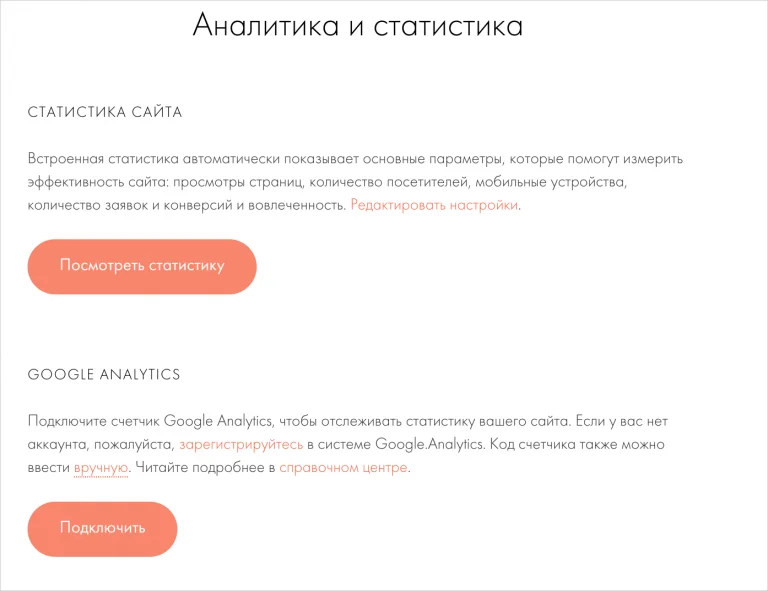
What analytics can a website builder support?
Builders often include basic analytics that can track
metrics such as clicks and form submissions. For deeper analysis, you can connect Google Analytics and review its reports in the service dashboard.
What about analytics on a CMS website?
If a project needs deeper analytics, a builder may be too restrictive. Large e-commerce sites, for example, often need detailed measurement. A custom CMS website can connect to analytics systems that track performance across pages.
Advanced web analytics can help optimise the sales funnel and increase revenue.
Round 4: Integrations
Can a website builder connect to external services?
Builders are limited to their available integrations. You may have to wait for a new integration or choose from the existing list, so a required widget, payment provider or CRM may not be available.
What can developers do?
A CMS site can be extended with the services your business needs. Developers can use existing integration modules or build new connections for your systems.
A site can also expose its own API so partners can work with it. For example, an online store might share a product feed with other websites.
Round 5: SEO
Are website builders limited when it comes to SEO?
For SEO, it matters less how a site was built than how well it serves its audience. Strong content, headings, metadata, internal links and a useful experience can all support search visibility.
If you later need to move a site from a builder to a CMS, a careful migration can minimise the loss of traffic and rankings.
Round 6: Time
Which is faster: a developer or a website builder?
Builders skip some coding and development steps, but complex design and animation still take time. Simpler designs can be assembled faster.
Our team typically completes builder-based websites one to two months faster than custom CMS development. The process has three stages: marketing planning, design development and website creation.
Which option should you choose?
What can you build with a website builder?
1. Landing pagesthat do not require highly customised design. A builder can be a practical choice for presenting one product, service or event, or for testing a new idea.
2. Small business websitesthat do not need frequent edits or new pages.
3. Online stores are also possible, especially with a smaller catalogue, where page speed and simple navigation are easier to manage.
When should you choose a CMS?
1. Landing pagesthat require complex design or animation, or may grow into a multi-page site.
2. Business websites — company, service and catalogue sites — built for long-term use. A tailored admin panel can support regular updates, hiring and PR content, product and service catalogues, filters and other features. CMS websites can also connect with internal systems and expand into online stores, marketplaces or forums as the business grows.
3. Online stores A CMS site can support up to 15,000 products, advanced features such as filters and calculators, and the server capacity needed as traffic grows. In addition, online store development CMS sites can connect to delivery and payment services, loyalty programmes, CRM and ERP systems, including integrations that may not be available through a builder.
The right website is one that justifies its investment and supports your business goals. Our team builds on Tilda and develops custom sites. Read about our approach via the link.
Read more


Get in Touch