A customer relationship management (CRM) system is software that helps optimise and automate many business workflows. With the right configuration, it can support companies of any size, helping increase sales, improve customer service and make marketing more effective. Pavel Kozhinov, account manager and sales marketing lead at Serenity, explains what to consider when choosing a CRM and shares recommendations for using one.


Choosing the Right CRM System
Sales marketing lead Pavel Kozhinov explains how to increase sales and automate business management.
How a CRM system can help
It helps you work with customers effectively and manage costs.
Tracking buyers through the sales funnel helps you see which touchpoints and formats influence the outcome—a closed deal—and which only use up budget. You can use these insights to encourage repeat purchases. Recording planned activities, calls and meetings also helps your team follow up and avoid losing customers.
Example of a CRM tracking a sales funnel:
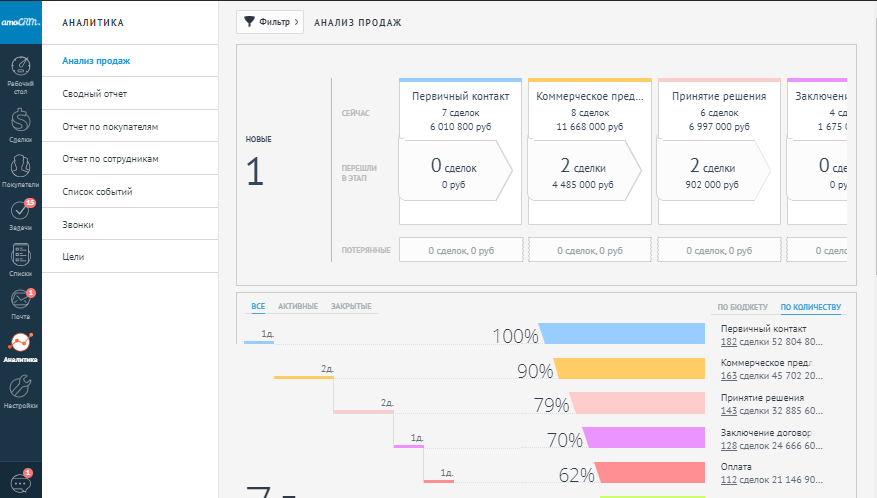
Every employee can access the relevant customer information. This helps customers feel recognised when they contact the company and can build loyalty. Customers are not tied to one employee either: if a manager is ill or leaves, the company's contact history remains available to the team.
It shows the status of each sale.
The system shows progress for an individual deal and for a group of deals over a selected period. You can see how many calls each manager makes, emails they handle and deals they close per day, month or year. Some CRMs can also record and analyse calls to help improve the team's work.
Some CRMs do more than organise customer records. They can support internal document workflows, integrate with websites, messaging apps and email platforms, track payments, and connect separate branches, departments and business areas into one system.
For a small company, or one that does not need many features, this flexibility can make a system difficult to configure. Instead of fitting into the sales process, the team may end up adapting its work to the software. Reviewing your business and the options available in advance can help avoid this risk.
What to consider when choosing a CRM
First, understand how your company's marketing and sales processes work.
If work is improvised, a CRM may simply automate the chaos and give managers more data to enter. To use the system effectively, the team needs a shared workflow and clear scenarios for communicating with customers.
This is usually when we identify what should be automated. At Serenity, we first design how the CRM and the team will work together, then implement and configure the system.
Examples of systems by industry:


Some industries have specialised software products.
Choose a CRM that fits your industry and the tasks you need it to handle. A retailer selling physical goods may need an online-store integration. A service business may need to track how long customers take to make a decision. A bank may need to manage collections and prevent overdue payments.
CRM selection criteria
An interface that is clear, comfortable and easy to use.
Your team should feel comfortable working in the system and finding what they need. If some modules or buttons are unnecessary, hide them in the settings so they do not cause confusion.
Data security and access controls.
The system should let you manage access to information and sections. For example, you may need separate financial records for each employee, targeted task assignment and a way to review completed work. Data protection should also be a priority.
An activity and change history.
It should be clear who added, edited or deleted information and when. This makes it easier to review a customer's record or resolve a disagreement.
A flexible system.
Your needs may change over time: you may need additional features or find that some options are no longer useful. Choose a system that can be adapted and reconfigured quickly.
Data quality standards and validation.
Accurate records about customers, deals and tasks help the CRM return reliable search results and reports. Check how the system validates entered data—for example, names written in different scripts—and whether you can adjust those rules.
At Serenity, we help clients choose and configure a CRM and recommend ways to improve an existing system. We brief employees on how they work with customers, review marketing and sales, research the target audience, and recommend ways to improve key metrics, strengthen the sales funnel and manage costs.
Read more


Get in Touch