

Targeted advertising strategy: five steps to launching a campaign
How to gather the right information and map the route to a campaign goal. We have already discussed launching test campaigns, but preparing for a test is only one part of the strategy.
We have already discussed the launch of test advertising campaigns, but preparing to test is only one part of the strategy Serenity develops for each project. A strategy maps and visualises the stages of work and clarifies what needs to happen to achieve the desired result.
Together with Oleg Drobyshev, Head of Paid Social, we will look at campaign strategy through our work with Vo!Moloko, a dairy-products supplier.
1. Learn about the product and brief the client
Strategy starts with learning about the product and briefing the client. The team talks with the client, reviews the website and social media, and reads customer feedback. This helps us understand the product and its audience.
The better the team understands the product, its strengths and its benefits, the fewer mistakes it is likely to make later.
Vo!Moloko products: fresh, natural products from Vologda. The company sells them in Saint Petersburg and the surrounding region.
The products' strengths were their taste and quality. We highlighted these qualities because the company worked only with major producers under strict quality control. The short shelf life reflected the natural ingredient list, with no preservatives or vegetable substitutes.
2. Set campaign goals and objectives
Once we understand the product, we define the campaign goals and objectives and choose traffic channels. These might include awareness campaigns to help the product reach more people, or lead-generation campaigns designed to turn visitors into prospective customers.
The brief for Vo!Moloko set out these goals:
— increase online-store sales;
— grow the network of local shops to support both in-store and online sales;
— build a distinctive image for products from the Vologda region: tasty, high-quality, natural and made to production standards.
3. Research the audience
With the goals set, we research the audience—including our client's and its competitors'. Audience research before a campaign is important because it helps us segment people and tailor the message to each group.
We look at different audience characteristics: location, demographics, interests, insights, motivations and barriers.
For Vo!Moloko, we collected audience information in three stages:
— described existing customers using the information already available, including the customer base and social-media and website analytics;
— surveyed 30 customers to learn who was buying, who they were buying for, what they liked about the service and what could be improved;
— used the competitor list, the current customer base and TargetHunter to learn about customers' other interests and the online communities they joined.
The research showed that the core audience consisted of married women aged 30–44 in Saint Petersburg, many with children of preschool or school age. They valued natural products and were willing to pay for quality and safety. They preferred cooking and eating at home, enjoyed dairy treats such as glazed curd bars and milkshakes, and were interested in gardening and cooking. In their free time, they read local news and talked with other parents and colleagues. Household income was around the middle of the range.
Based on the research, we identified four main audience segments in Saint Petersburg and launched campaigns for them.

4. Develop advertising creative
After developing the audience profiles, we:
— choose landing destinations such as a website, lead form or quiz;
— develop key messages and offers based on what we learned about the product and audience, as well as customer comments, questions, reviews and suggestions;
— develop the visual direction. We use tools to research competitors, such as AdHeart and TargetHunter, review their banners and create a design that helps the brand stand out.
Well-developed creative can make an advert more memorable and reduce the cost of reaching a potential customer.
For Vo!Moloko, we analysed 80 direct and indirect competitors.
The audience research showed that most customers preferred to get updates on VKontakte, with Instagram also popular. We therefore focused on those platforms for this project.
In the first month, we decided to test two campaign messages:
— high-quality products: fresh, natural products from trusted producers in Vologda;
— value for money when buying product bundles.

5. Set up campaigns in the advertising platforms
Next, we build the campaigns in the advertising platforms: collect and save audiences, then configure the ads. Only after that do we click “Launch” and begin the test campaign.
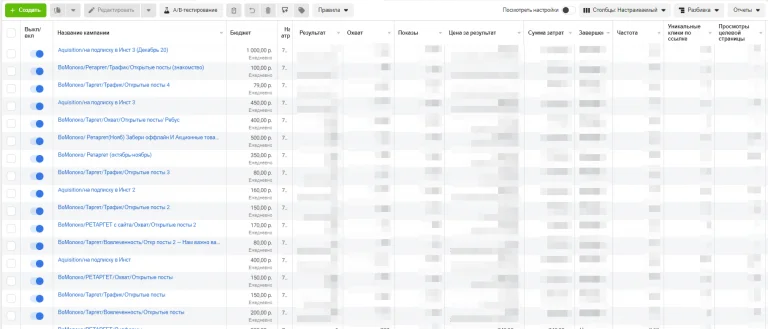
Screenshot of the campaign setup in Facebook Ads Manager
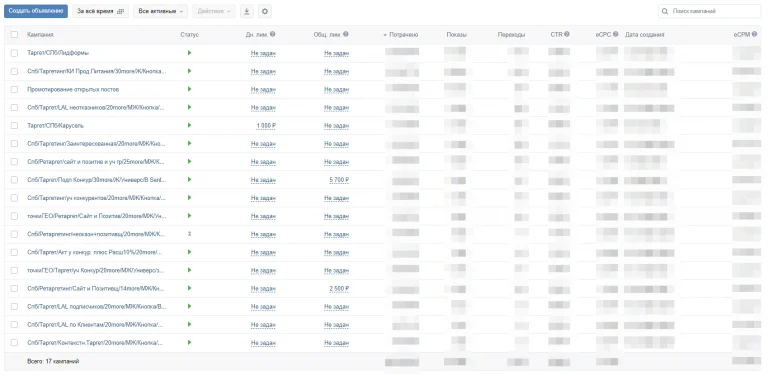
Screenshot of the campaign setup in VK Ads Manager
Results
Developing the strategy is only part of the work on a paid social campaign; it is only the beginning. The results are not expressed in numbers here, but the strategy helps avoid potential pitfalls and clarifies what stage the project is at and what outcomes to expect.
The strategy work for Vo!Moloko helped us:
— identify purchase motivations (healthy, natural and GMO-free; “just like it used to be”) and barriers (“what if the delivery is past its sell-by date?”, “it costs more than in a shop” and “I have never heard of this producer”);
— articulate the value for customers and give them a reason to buy;
— use what we learned about the product and audience to develop a joined-up advertising approach, making later work and budget allocation more efficient.

A customer journey mind map is part of the advertising strategy
A well-developed strategy can support stronger results from integrated brand marketing. Over three months, work with Vo!Moloko increased purchases by around 15 times and reduced the cost per order by about fivefold. Read more about the Vo!Moloko project here.
This article looked at paid social campaign strategy. We use an integrated approach in other areas too—explore more of our case studies on our website.
Read more


Get in Touch